
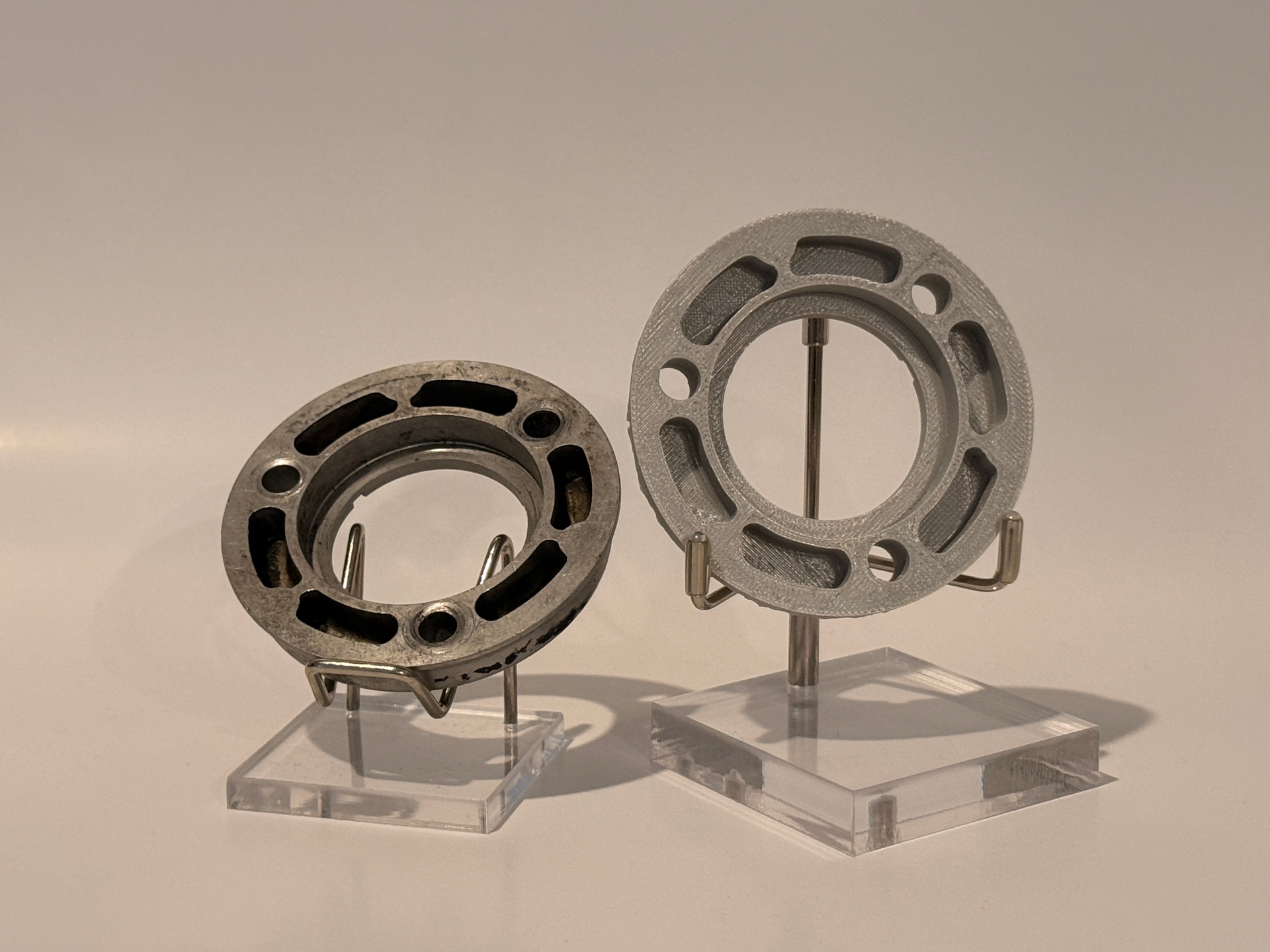
PROJECT DETAIL // PORSCHE CAMSHAFT PLATE HOLDER
NOMINAL GEOMETRY, RESTORED.
Resurrecting automotive components for modern machining. Here, a no-longer-produced part is digitally stored for on-demand manufacturing. Scan-to-digital inventory preserves legacy geometry without the physical component.
01 // THE CASE STUDY
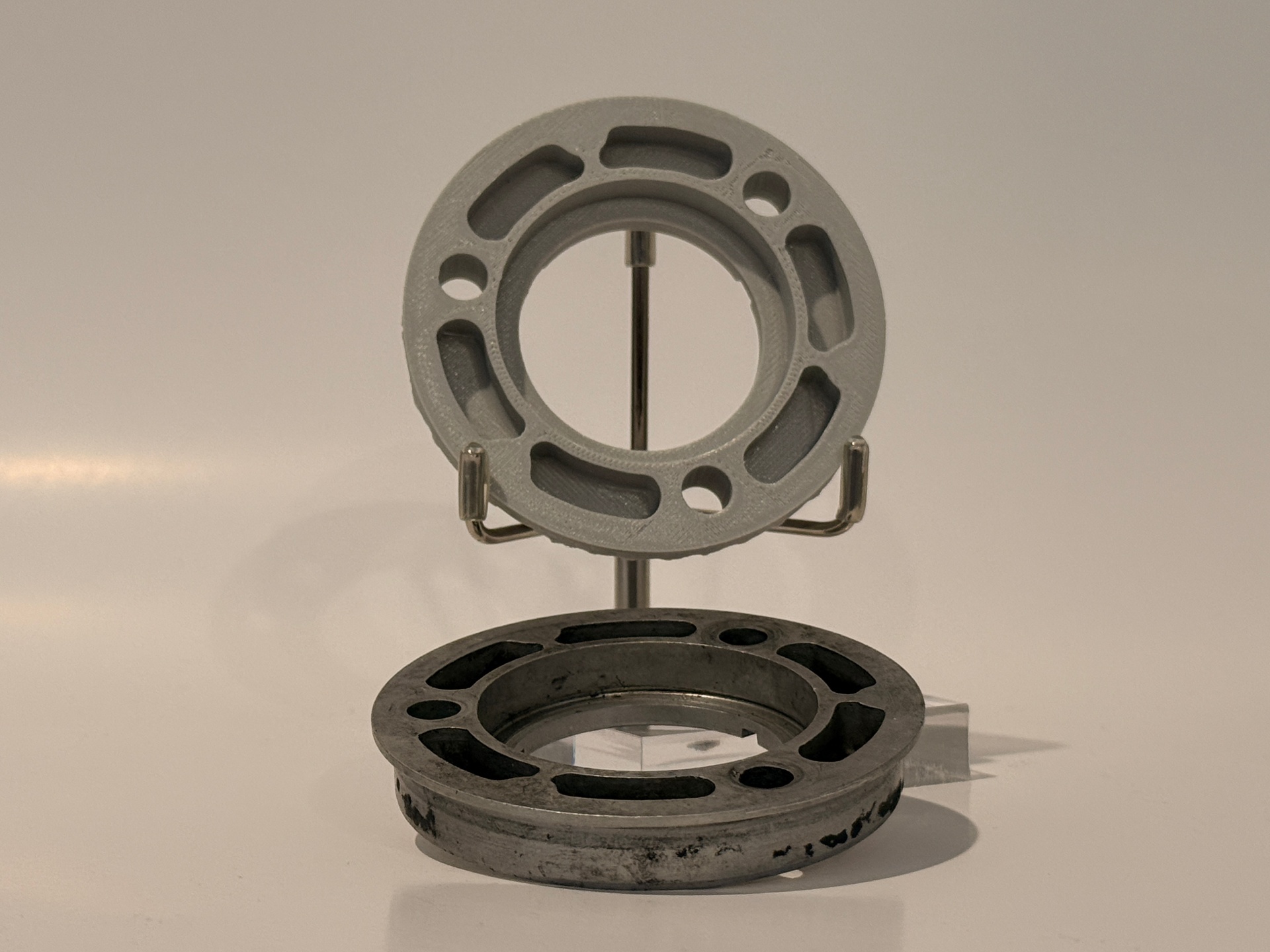
Scanned from original, modeled to nominal, and digitally stored.
The original '60s Porsche camshaft plate holders are no longer produced and surviving examples carry decades of thermal cycling, and wear.
The donor example with carbon buildup, was still useful for extracting key geometric features. Using QUICKSURFACE and SolidWorks, the worn geometry was dimensionally restored as a parametric CAD model. Useful for CAM programming, creating drawings, and future assembly work.
The result is a part that fits OEM mounting interfaces and is fully reproducible for future production runs. Whether a simple plate or complex geometry, the scan-to-inventory process ensures future parts availability without physical dead-stock inventory.
02 // SCAN CAPTURE
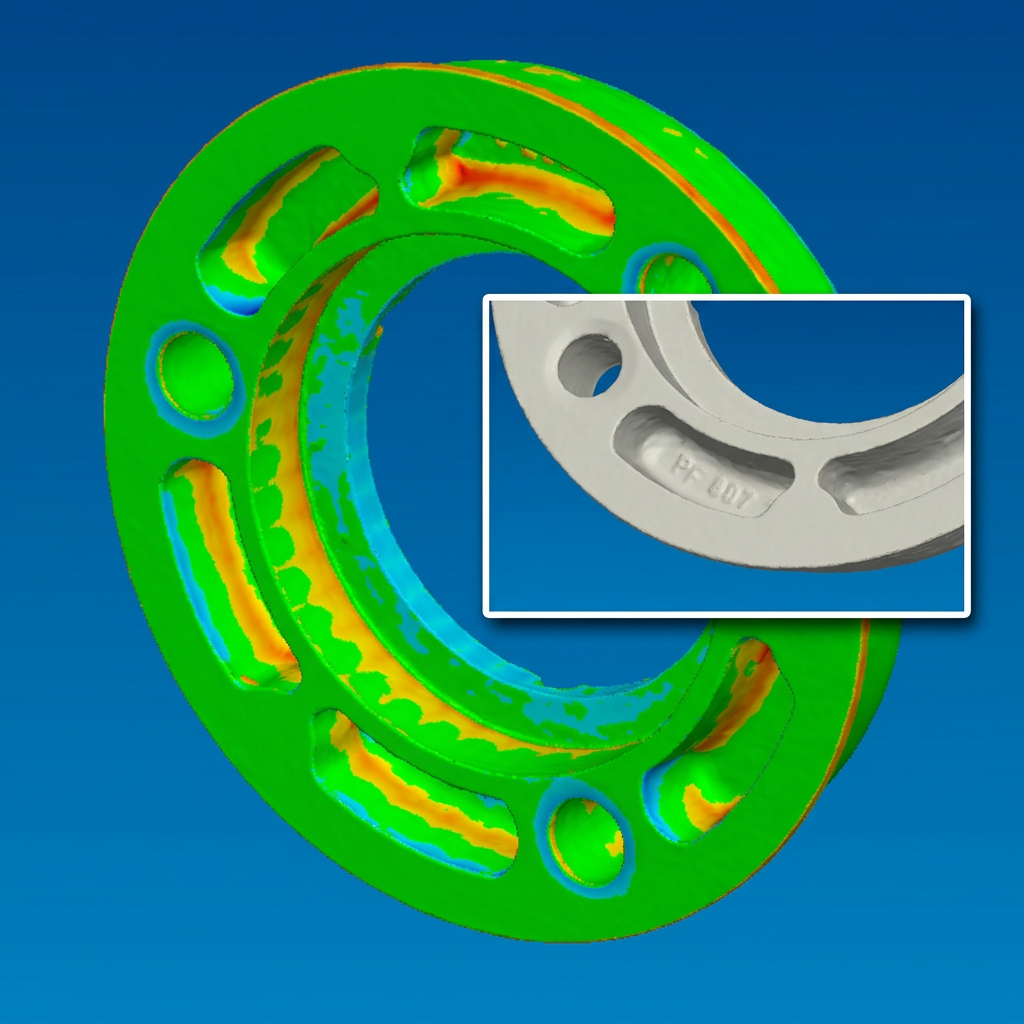
Contactless 3D Scan
The donor part was captured on an Einstar Rockit scanner at sub-millimeter resolution. Three scans were used, one for each side, and one to stitch all together. Output is raw STL format.
- —Hardware: Einstar Rockit
- —Resolution: 0.10 mm point spacing
- —Output: Registered, watertight STL
03 // NOMINAL CAD
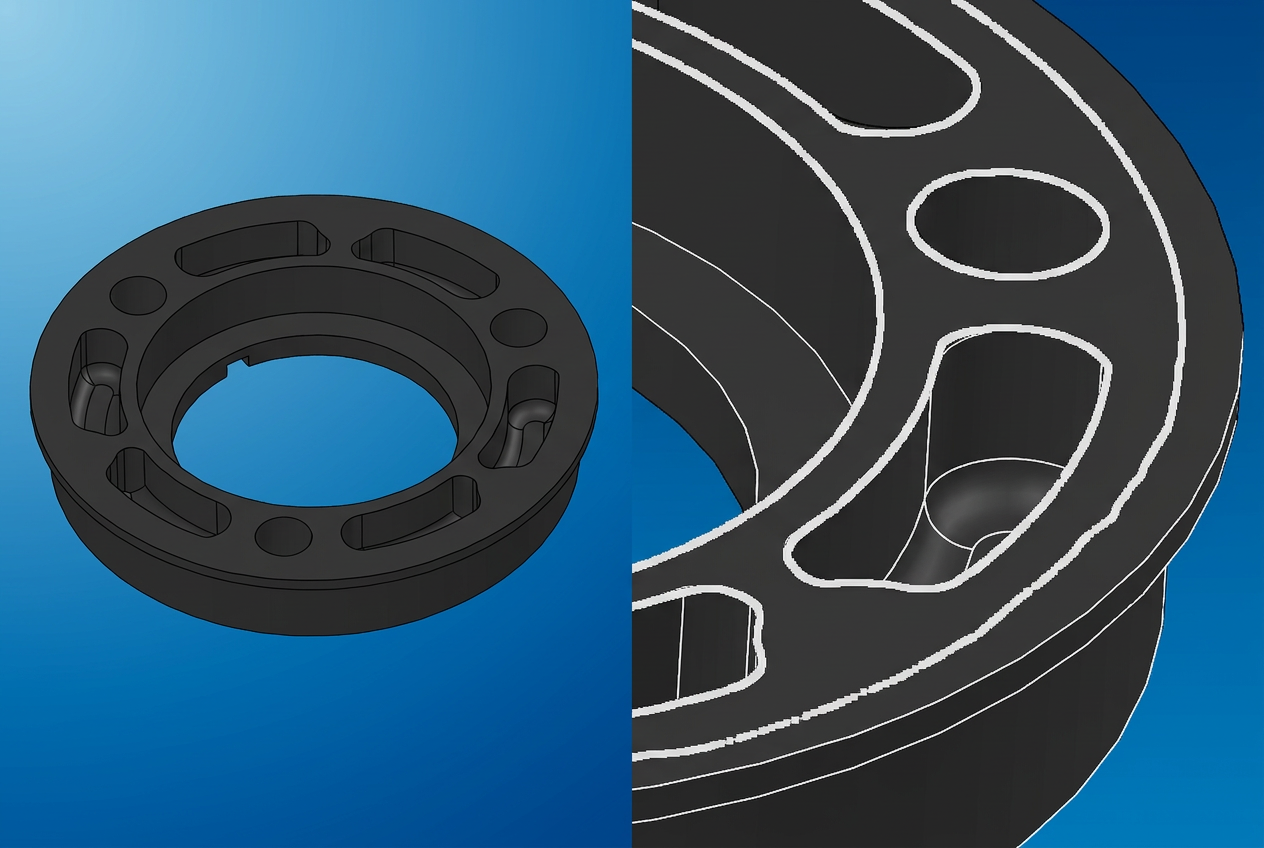
Not a mesh wrap: a fully-dimensioned parametric model.
QUICKSURFACE is a great tool for extracting geometry using cross sections, surface tools and mesh refinement. The SolidWorks combination creates a fully-dimensioned model, the key step in any 3D scan. The STEP model is ready for programming and 3D printing.
- —Engine: SolidWorks + QuickSurface
- —Method: parametric nominal reconstruction
- —Output: CAM-ready STEP model, accurate part drawing
05 // SPECIFICATION SHEET
06 · Engage
Have a legacy or NLA component?
Send us your details and we'll get back to you right away!